



How to create a corporate traveller wellbeing strategy
To create a corporate traveller well-being strategy, organisations need to design travel programmes that actively enhance well-being rather than contribute to stress and fatigue. Corporate travel isn’t just about cost savings and logistics; it’s about people.
Done correctly, a traveller well-being strategy considers the full traveller journey, from pre-trip preparation through to returning home. The result is a well-supported traveller that a productive, engaged, and a loyal employee.
Travel programme managers should also collaborate with stakeholders such as HR, risk management and sustainability teams. These groups can integrate initiatives like mental health support, physical wellness programmes, and work-life balance policies, helping organisations foster an environment where employees feel cared for, leading to higher productivity, satisfaction and loyalty.
In this blog, you’ll discover insights and strategies to build a traveller well-being programme that reduces stress and maximises productivity.
Why should corporate travel itineraries prioritise comfort and health?
Corporate travel can often be physically demanding. Long flights, tight schedules and unfamiliar environments can strain a traveller’s physical health, leading to fatigue, jetlag and discomfort. A traveller well-being strategy addresses these challenges by ensuring the travel programme supports physical comfort.
Choosing the right airline and hotel partners isn’t just about cost; it’s about ensuring travellers arrive well-rested and ready to perform.
How can organisations reduce travel stress and improve productivity?
The mental and emotional health of corporate travellers can be overlooked, but it’s just as critical. Frequent travel can be isolating and may impact personal well-being and professional performance.
On the flip side, short-term business travel may have a positive impact, providing a change of environment and exposure to new destinations, experiences and people; so, finding balance for travellers while achieving organisational goals is important.
To support mental well-being, organisations can focus on reducing stressors tied to travel that may lead to burnout. Stressors could be things such as:
- frequent overnight trips
- time-zone changes
- last-minute
- weekend travel.
Access to these data insights can provide travel programme managers with early detection of travel patterns that may lead to fatigue and allow employees to stay in control and reduce stress.
Additionally, organisations can encourage mindfulness practices, ensuring travellers have enough downtime to unwind and participate in activities they enjoy, such as reading a book, taking a walk, enjoying the local surroundings and fostering communication that allows employees to express concerns about their trips.
 How can corporate travel programmes support work-life balance?
The emotional impact of travel is also worth addressing. For many travellers, extended trips can blur the boundaries between work and personal life, creating a sense of disconnection from family and home life. A corporate traveller well-being strategy helps travellers maintain a balance and feel emotionally supported throughout their journey.
One effective approach is to provide resources that allow for work-life balance on the road, such as flexible working hours, opportunities for downtime, or even tools that encourage connection with loved ones. Encouraging travel policies that allow travellers to extend work trips into personal vacations (where possible) may further enhance emotional well-being.
How does technology enable well-being-focused corporate travel programmes?
Technology will play an increasingly pivotal role in shaping well-being strategies. Tools like CTM’s well-being scores and traveller well-being data empower organisations to track and respond to the well-being of their employees in real-time.
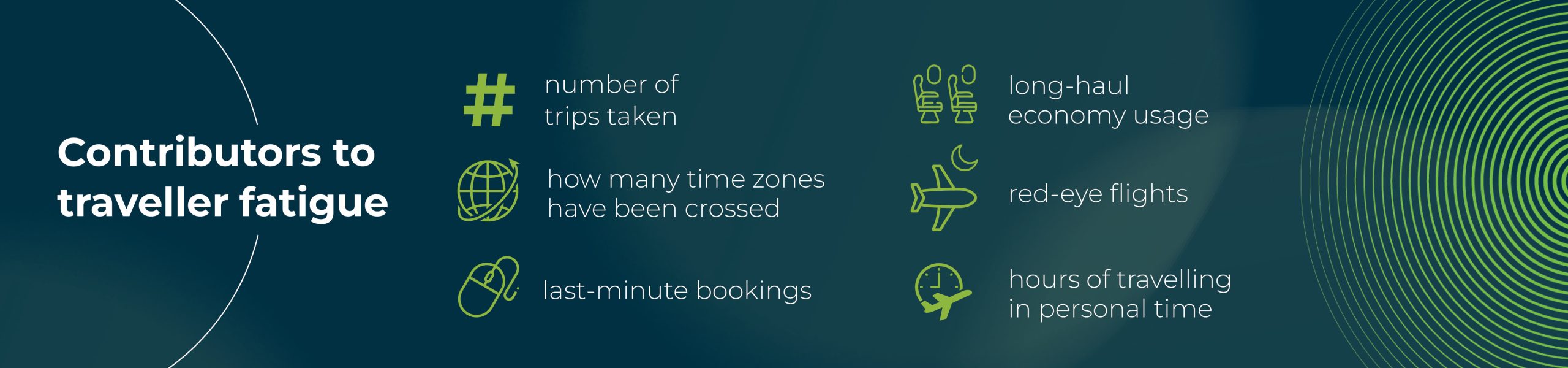
Access to information such as:
- the number of trips taken
- how many time zones have been crossed
- last-minute bookings
- long-haul economy usage
- red-eye flights
- the hours of travelling in personal time
can all contribute to traveller fatigue and and stress levels, depending on the frequency. By taking a proactive approach, organisations can help reduce the emotional toll that extended travel or high-pressure schedules may have on their employees.
For instance, the well-being score gives travel managers insight into travellers’ estimated well-being by analysing their travel patterns. It calculates a score based on their trips over the past 90 days and forecasts their well-being for the next 14 days.
Well-being data then provides valuable insight that can help companies gauge the overall health of their corporate travel programme and understand traveller experiences on a deeper level. By analysing factors like sleep patterns, travel stress, and trip fatigue, companies can make informed decisions about how to improve the travel experience and better support their employees.
What strategies improve traveller well-being across the travel journey?
A well-structured travel programme goes beyond booking flights and hotels, it actively supports employee wellbeing at every stage of the journey. Here’s how travel managers can make a real impact:
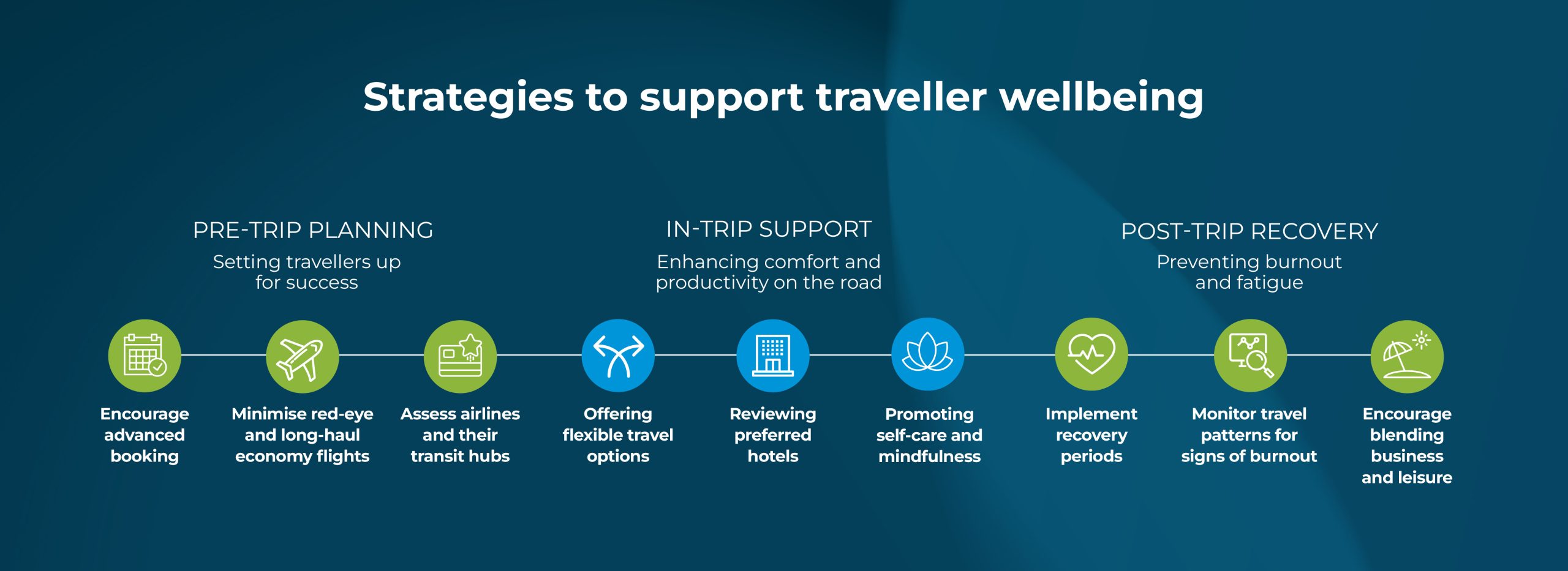
1. Pre-trip planning: setting travellers up for success
Making strategic decisions before a trip even begins can significantly reduce stress and fatigue.
Organisations can:
- Encourage advanced booking: Reducing last-minute trips gives travellers more control over their schedules and allows for better planning of flights, accommodations and meetings.
- Minimise red-eye and long-haul economy flights: When possible, prioritise flights at reasonable times and offer premium economy or business class for frequent long-haul travellers.
- Assess airlines and their transit hubs: Partnering with reputable airlines that offer a high standard of product and service complemented by state-of-the-art airports with shorter connection times and wellness amenities (lounges, rest areas, etc.) improves the travel experience.
2. In-trip support: enhancing comfort and productivity on the road
Travellers face various stressors while in transit and at their destination.
Organisations can help by:
- Offering flexible travel options: Allowing employees to arrive a day early before critical meetings gives them time to acclimatise and rest.
- Reviewing preferred hotels: Ensuring accommodation meets comfort and wellness standards (e.g., nutritious meals, high-quality bedding, fitness facilities) supports better rest and recovery.
- Promoting self-care and mindfulness: Encouraging small habits like taking walks, enjoying the local surroundings, or disconnecting after work hours can help maintain mental and physical health.
3. Post-trip recovery: preventing burnout and fatigue
Returning from a trip should not immediately mean jumping back into high-pressure work.
Organisations may:
- Implement recovery periods: Set internal guidelines on mandatory rest time after long-haul or overnight travel to help employees feel energised and motivated.
- Monitor travel patterns for signs of burnout: By using well-being data, HR and travel teams can identify employees at risk and adjust their schedules accordingly.
- Encourage blending business and leisure (where possible) – allowing employees to extend a work trip for personal time can reduce stress and improve overall job satisfaction.
Travel programme managers have a unique opportunity to shape a culture of care. By leveraging tools like CTM’s wellbeing scores and implementing proactive strategies, organisations can make positive change in the fabric of their travel programmes and create a culture of care that prioritises the health and wellbeing of their travelling workforce. This can result in a positive travel experience for everyone, no matter where their business travel takes them.
How will you put corporate traveller wellbeing first?
CTM is ready to support your business and keep your people moving.
What is a corporate traveller well-being strategy?
A corporate traveller well-being strategy is an approach to business travel that prioritises employee health, comfort, and mental well-being across the entire travel journey. It considers factors such as travel frequency, scheduling, accommodation quality, recovery time, and emotional support to reduce stress and fatigue while improving productivity and engagement.
Why is traveller well-being important in corporate travel programmes?
Frequent business travel can lead to fatigue, stress, and burnout if not managed carefully. Prioritising traveller well-being helps organisations protect employee health, improve job satisfaction, increase productivity, and support long-term retention, while still meeting business objectives.
How can companies reduce travel-related stress for employees?
Organisations can reduce travel stress by minimising last-minute bookings, limiting red-eye and frequent overnight trips, managing time-zone impacts, allowing flexible schedules, and providing adequate rest and recovery time. Using travel data to identify high-risk travel patterns also enables proactive intervention.
How does technology support traveller well-being?
Travel technology can track factors such as trip frequency, time-zone changes, long-haul travel, red-eye flights, and travel during personal time. Tools like well-being scores analyse these patterns to provide insights into traveller fatigue and forecast future well-being, helping travel managers make informed, supportive decisions.
What role do travel managers play in employee well-being?
Travel managers help shape a culture of care by designing travel programmes that balance business needs with employee health. This includes selecting comfortable airline and hotel partners, setting travel guidelines that reduce fatigue, and collaborating with HR and risk teams to support mental, physical, and emotional well-being.
How can organisations support work-life balance for traveling employees?
Supporting work-life balance may include flexible working hours while traveling, allowing downtime, encouraging connection with family, and permitting employees to extend business trips for personal travel where appropriate. These measures help travellers feel more supported and less disconnected
What should happen after a business trip to support recovery?
Post-trip support can include allowing recovery time after long-haul or overnight travel, monitoring ongoing travel patterns for signs of burnout, and adjusting future travel schedules to prevent fatigue and maintain long-term well-being.